Competency Frameworks for Fostering Global Talent: South Korea, Australia, and Europe Case Studies

As globalization accelerates, countries are striving to standardize and systematize the competencies required in the labor market. As part of these efforts, South Korea, Australia, and Europe have developed their own qualification and competency frameworks tailored to their specific characteristics and needs. This article aims to compare and analyze the competency frameworks of these countries and explore the role these frameworks play in the global labor market.
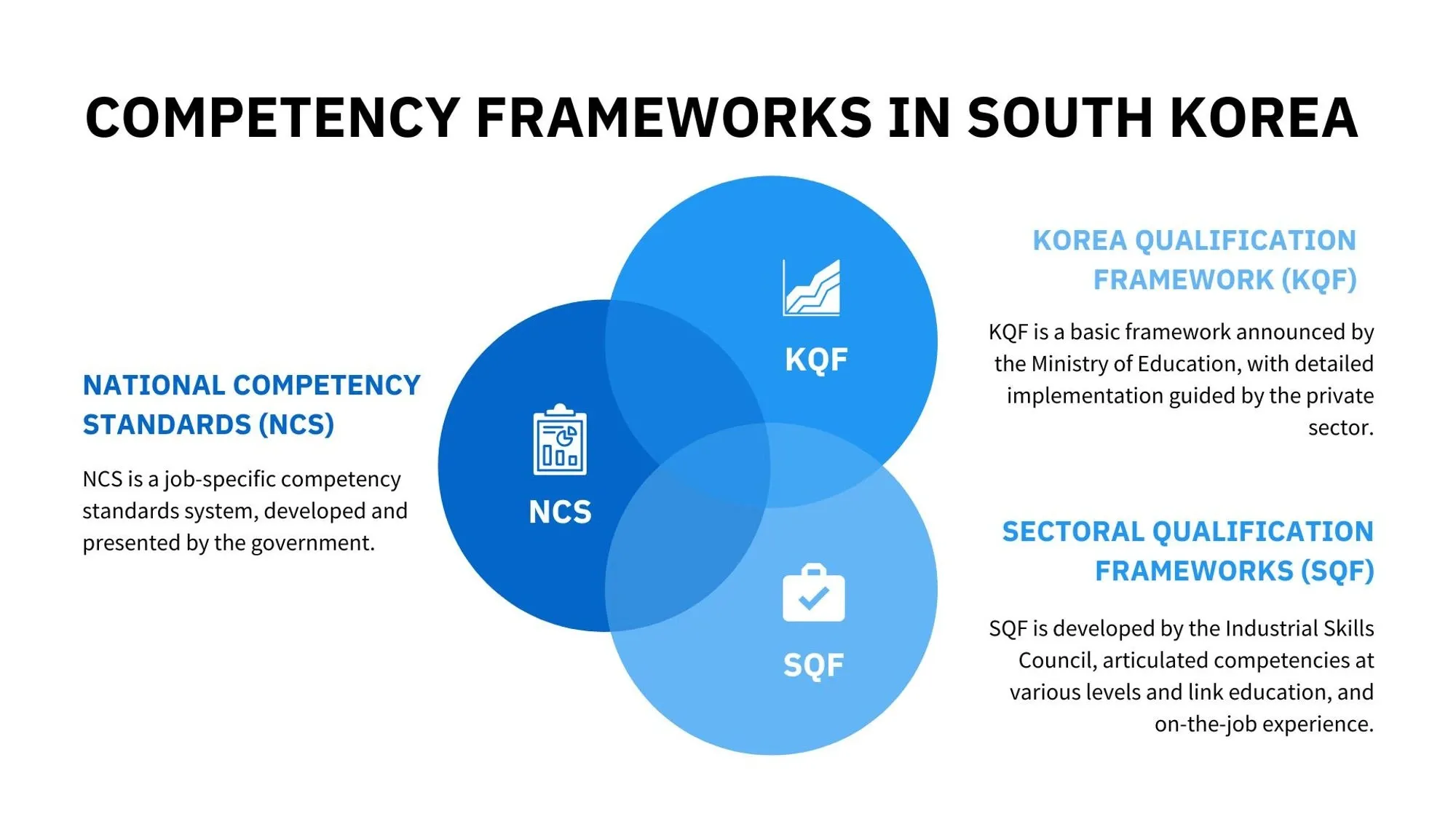
The National Competency Standards (NCS) and the Korean Qualifications Framework (KQF) of South Korea
South Korea has established a job-specific competency standards system called the National Competency Standards (NCS). Based on this, it has introduced the Korea Qualifications Framework (KQF), a national-level competency management system that links academic qualifications, certifications, on-the-job experience, and training outcomes. While the NCS is developed and presented by the government, the KQF is a basic framework announced by the Ministry of Education, with detailed implementation guided by the private sector. Specifically, Industrial Skills Council (ISC) in each industrial sector take the lead in developing Sectoral Qualification Framework(SQF), which articulate competencies at various levels and link education and training, qualifications, and on-the-job experience. Efforts are made to create a virtuous cycle involving applicable wages, career development paths, workforce supply and demand, and job creation.
Australian Qualifications Framework (AQF)
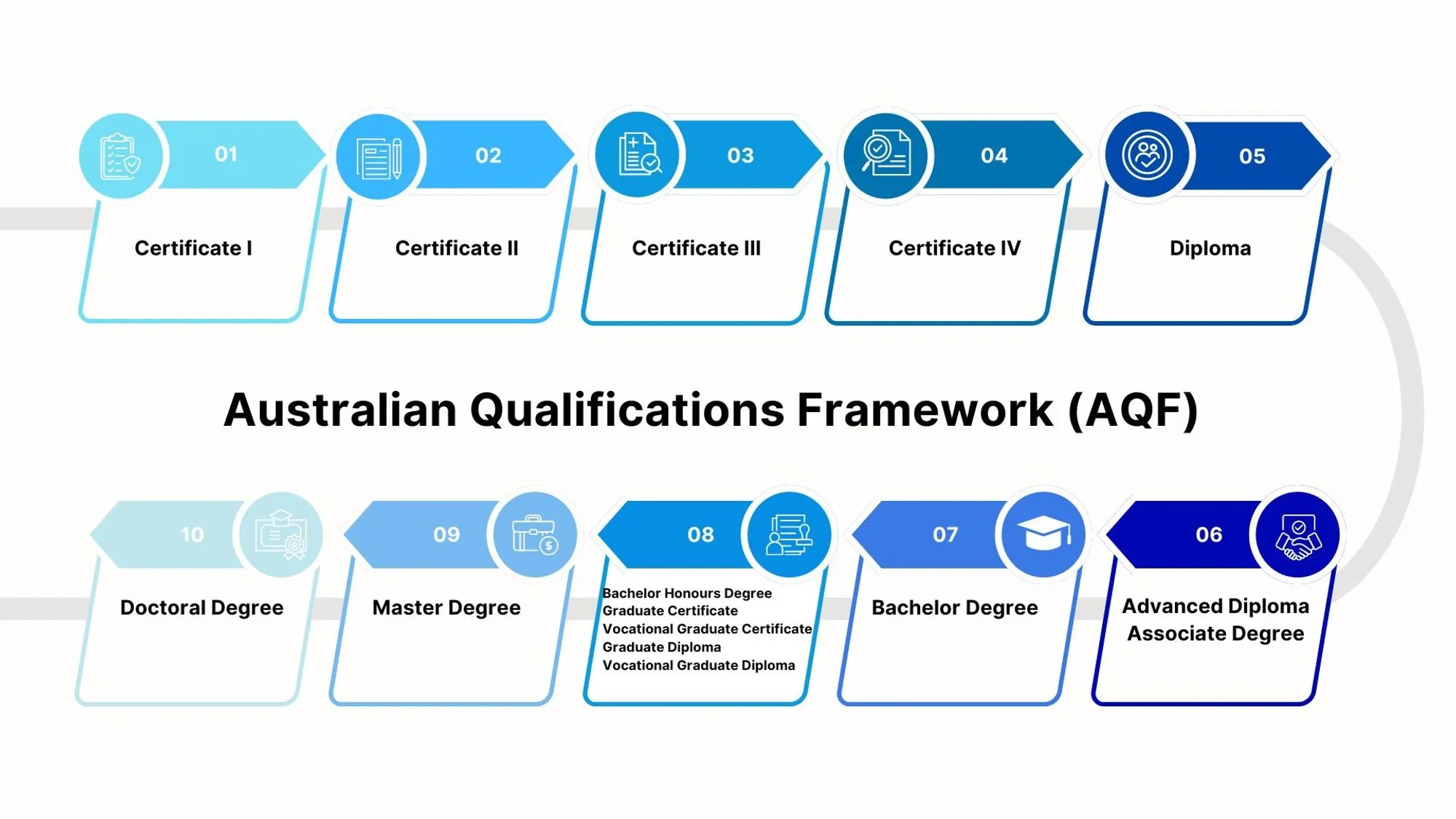
Competency frameworks are not unique to South Korea; various other countries also have similar systems in place. Generally, the most well-known example is Australia’s competency framework (AQF, Australian Qualification Framework). Particularly for those preparing for studying abroad and immigration to Australia, the Australian competency framework is a very important part. This is because Australia manages and presents labor market entry very specifically according to academic qualifications, certifications, and levels of education. Australia has presented the operational goal of the AQF as “increasing labor participation rates by equipping people of all ages with the necessary skills and qualifications to effectively participate in the labor market, thereby contributing to Australia’s economic future”. Therefore, it emphasizes that qualifications granted through nationally recognized training are acknowledged and valuable.
European Common Competency Frameworks: European Qualifications Framework (EQF)
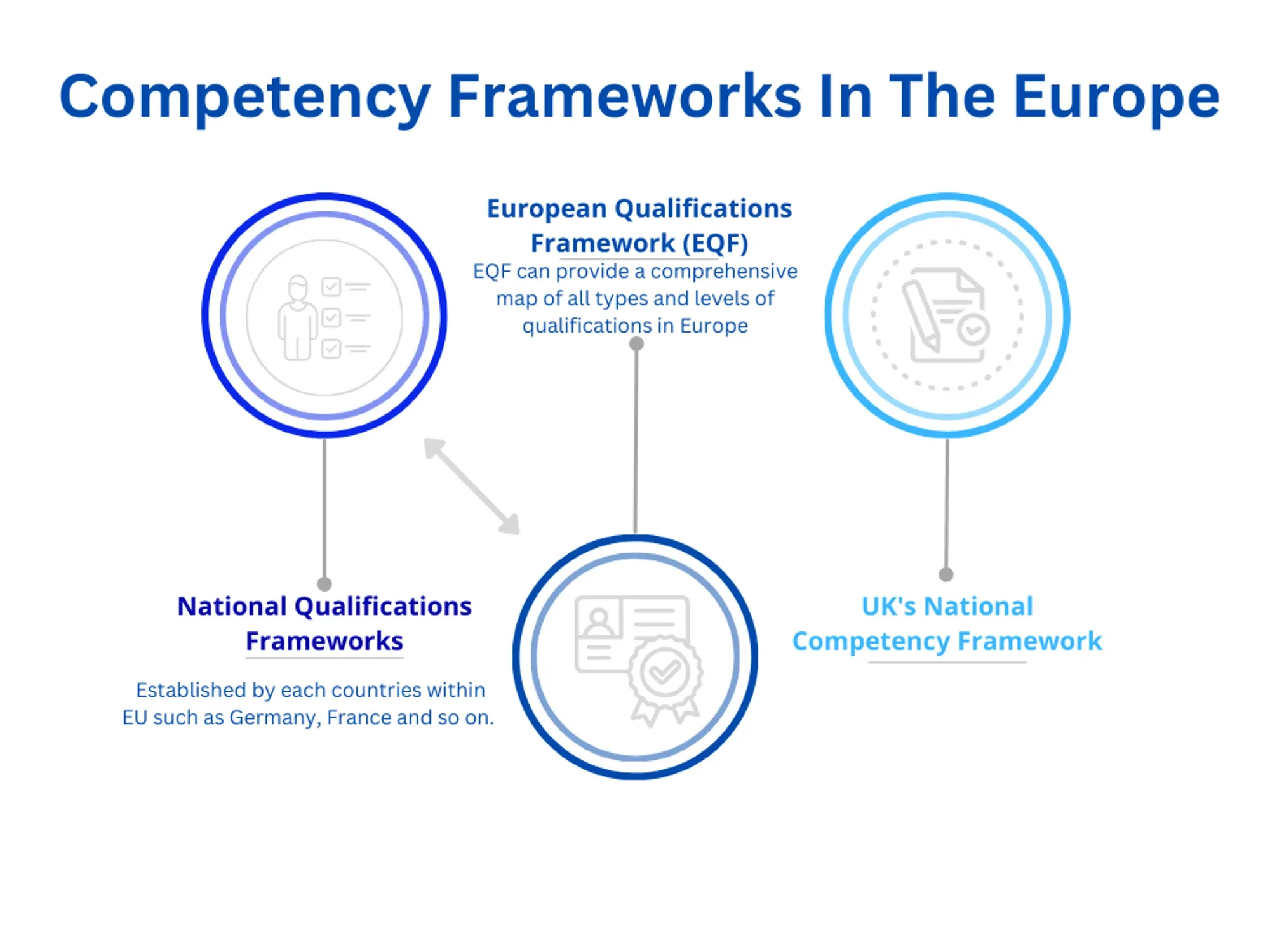
Europe manages a common competency framework through the EU. The European Qualifications Framework (EQF) presents knowledge, skills, and competences as learning outcomes, integrating the competency frameworks already established by each country, such as France and Germany, to guide the appropriate placement of personnel in the labor market within EU countries. For instance, Germany’s National Qualifications Framework (DQR, Deutscher Qualifikationsrahmen) specifies the levels of both the EQF and DQR on all issued certifications, ensuring that the levels according to Germany’s competency framework are recognized across EU countries.
Conversely, after the UK’s withdrawal from the EU, the relationship between the UK’s national competency and qualifications framework and the EQF has shown a tendency to become somewhat loose. When the UK left the EU, many young people feared a ‘contraction of the labor market’ due to potential difficulties in ‘flexible placement within the labor market,’ which is now reflected in the relationship between the EQF and the UK’s national competency framework.
Rationale for Developing National Competency Frameworks
As seen above, the reason for concretizing national competency frameworks by country is to attract and foster excellent talent. Many countries manage national-level competency frameworks to actively support outstanding talent in their pursuit of study and immigration and to support the development of their own citizens’ talents amidst the “talent war.” Many countries also consider labor market inflow during international mobility, issuing visas accordingly to attract talent.
Understanding competency levels and frameworks helps facilitate mobility according to labor market demand and supply, and it is fascinating to note that this understanding is also used to attract and manage outstanding talent between countries. Therefore, in Australia, the competency framework is even referred to as the nation’s “key currency,” highlighting the ability of top talent to move freely within the labor market according to the competency framework.
Enhance Your Digital Competencies with Codepresso
The digital skills you develop on the Codepresso platform will become your global competency assets, helping you grow into a valuable talent in the global labor market. Codepresso can be your partner in enhancing your digital competencies, supporting your growth potential and career advancement.
Join us in our forthcoming Codepresso programs designed to enhance your digital competencies.





Comments ()